PVI Chemical (CTP) is an important pre-vulcanization inhibitor and scorch retarder used in sulfur-cured rubber compounds. It helps delay premature vulcanization during mixing, calendaring, extrusion and other high-temperature processing operations while allowing the intended final cure to proceed. PVI is also known as N-(cyclohexylthio)phthalimide or N-(cyclohexylthiophthalimide) and has CAS No. 17796-82-6.
For buyers, formulators and procurement teams, PVI is particularly relevant when a rubber compound needs better scorch safety without unnecessarily sacrificing final curing performance.
What Is PVI Chemical?
PVI stands for a pre-vulcanization inhibitor commonly known in the rubber industry as CTP. Chemically, it is N-(cyclohexylthio)phthalimide.
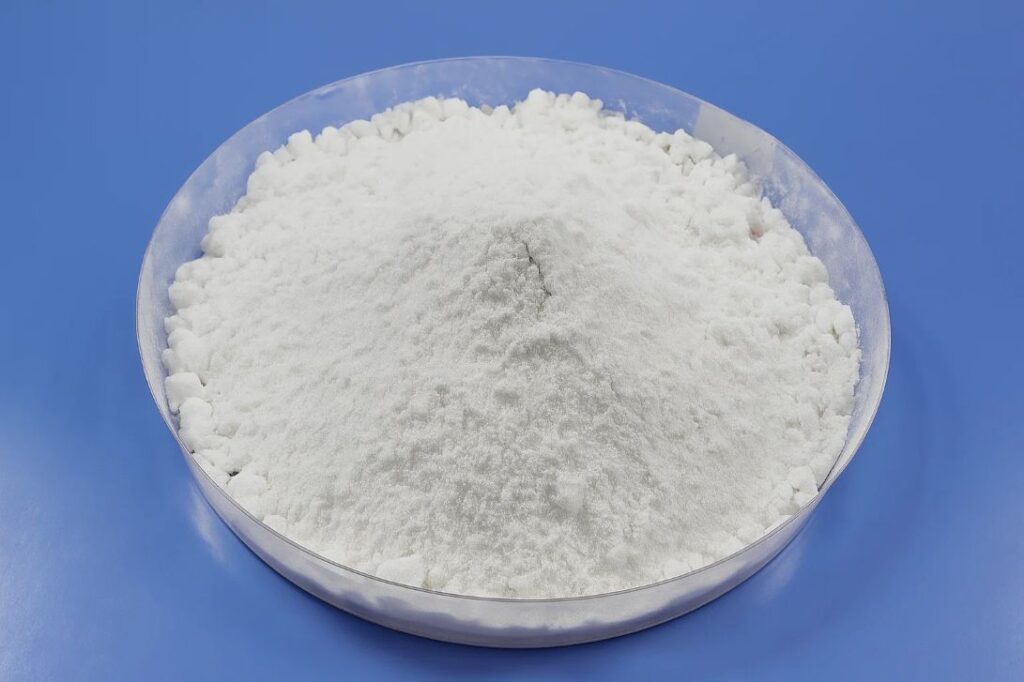
It is primarily used as a scorch retarder in sulfur-vulcanized natural and synthetic rubber systems. Commercial PVI products are commonly supplied as white to light-yellow crystalline powder or granules.
Basic Chemical Information
| Property | Details |
|---|---|
| Common Name | PVI / CTP |
| Chemical Name | N-(Cyclohexylthio)phthalimide |
| Alternative Name | N-Cyclohexylthiophthalimide |
| CAS Number | 17796-82-6 |
| Molecular Formula | C₁₄H₁₅NO₂S |
| Molecular Weight | 261.34 g/mol |
| Chemical Type | Thioimide / scorch retarder |
| Main Function | Pre-vulcanization inhibitor |
| Physical Form | Powder / crystal / granule |
| Typical Colour | White to light yellow |
| Melting Point | Approximately 89–94°C for many commercial grades |
| Water Solubility | Insoluble |
| Typical Rubber Role | Scorch control |
Commercial specifications vary by manufacturer and grade, so the supplier’s current TDS should be used for procurement decisions.
PVI Chemical Formula
The molecular formula of PVI/CTP is:
C₁₄H₁₅NO₂S
Its molecular weight is approximately:
261.34 g/mol
The CAS Registry Number is:
17796-82-6.
Chemical Structure
PVI contains a phthalimide structure linked through sulfur to a cyclohexyl group. It is classified as a thioimide-type rubber chemical and functions as a scorch inhibitor in sulfur vulcanization.
What Does PVI Do in Rubber?
The main job of PVI is to delay the beginning of vulcanization.
During rubber processing, premature vulcanization—known as scorch—can create serious manufacturing problems. If a compound begins curing too early during mixing, extrusion or calendaring, it can become difficult or impossible to process correctly.
PVI helps provide additional processing safety by delaying this premature cure.
Simple explanation:
Without sufficient scorch control:
Mixing → Heat → Premature cure → Processing problem
With appropriate PVI:
Mixing → Heat → Controlled scorch time → Processing → Intended final vulcanization
PVI is specifically described as a pre-vulcanization inhibitor that improves processing safety in natural and synthetic rubber systems.
Why Is PVI Important?
Rubber processing often involves elevated temperatures.
Manufacturers need the compound to remain processable during manufacturing but cure rapidly enough at the intended vulcanization stage.
This creates a balance:
Longer scorch safety + controlled final cure = Better processing window
PVI helps widen that processing window.
Main Uses of PVI Chemical
PVI is used across many sulfur-vulcanized rubber applications.
Major applications include:
- Tyres
- Automotive rubber components
- Conveyor belts
- Rubber hoses
- Rubber belts
- Seals
- Gaskets
- Industrial rubber goods
- Technical rubber products
- Rubber profiles
- Molded rubber products
- Extruded rubber products
- Natural rubber compounds
- Synthetic rubber compounds
PVI can be used with several rubber types, including NR, SBR, NBR, BR, butyl rubber, neoprene and EPDM systems, depending on the formulation and curing system.
Industry-Wise PVI Applications
| Industry | Typical Applications | Purpose of PVI |
|---|---|---|
| Tyre Industry | Passenger, truck, bus and industrial tyres | Improve scorch safety |
| Automotive | Hoses, seals, gaskets, mounts | Processing control |
| Conveyor Industry | Conveyor belts | Prevent premature cure |
| Hose Industry | Industrial and automotive hoses | Increase processing window |
| Belt Industry | V-belts, drive belts | Scorch protection |
| Rubber Goods | Molded components | Processing safety |
| Extrusion Industry | Profiles, tubing and extruded goods | Prevent premature vulcanization |
| Technical Rubber | Engineering components | Better processing control |
| Industrial Rubber | Heavy-duty rubber products | Control early curing |
PVI in Tyre Manufacturing
Tyre manufacturing involves several complex processing stages, including:
Mixing → Milling → Extrusion → Calendaring → Building → Vulcanization
At several of these stages, excessive heat can increase the risk of premature vulcanization.
PVI can help provide additional scorch safety so that the compound remains workable until the intended curing stage.
This is particularly valuable in formulations using sulfenamide accelerators, for which PVI is specifically described as a suitable retarder.
PVI in Natural Rubber
PVI can be used in suitable NR sulfur-cured compounds to delay premature vulcanization.
Potential benefits include:
- Better scorch safety
- Improved processing control
- Longer processing window
- Better storage stability
- Reduced risk of premature cure
PVI in Synthetic Rubber
PVI is also used in suitable synthetic rubber formulations.
Potential rubber types include:
- SBR
- BR
- NBR
- IIR
- CR
- EPDM
- Other sulfur-vulcanized systems
The exact suitability depends on the polymer and accelerator/sulfur system.
PVI and Sulfenamide Accelerators
One particularly important application of PVI is its use with sulfenamide-based curing systems.
Sulfenamide accelerators are designed to provide delayed action, but some formulations still require additional scorch control.
PVI can therefore be used to further manage processing safety.
This makes it particularly relevant to rubber compounds containing accelerators such as:
- CBS
- TBBS
- DCBS
- Other suitable delayed-action accelerator systems
A technical PVI data sheet specifically identifies its use as a retarder for NR and other rubbers, especially conventional systems using sulfenamides.
Benefits of PVI
1. Improved Scorch Safety
The primary benefit is delaying premature vulcanization during processing.
2. Wider Processing Window
Manufacturers gain more time to process the compound before curing begins.
3. Better Processing at Elevated Temperatures
PVI can allow rubber compounds to tolerate higher processing temperatures or longer processing periods, depending on formulation.
4. Better Storage Stability
PVI can help reduce unwanted natural vulcanization during storage of suitable rubber compounds.
5. Compatibility with Different Rubber Systems
It can be used in various sulfur-vulcanized NR and synthetic-rubber formulations.
6. Useful for High-Speed Processing
Additional scorch safety can be particularly valuable where processing speeds and temperatures are high.
Advantages of PVI
| Advantage | Why It Matters |
|---|---|
| Strong scorch control | Reduces risk of premature vulcanization |
| Better processing safety | Provides a larger processing window |
| Suitable for sulfur curing | Designed specifically for sulfur-vulcanized systems |
| Broad rubber compatibility | Useful across multiple elastomers |
| Useful with sulfenamides | Particularly relevant to delayed-action accelerator systems |
| Storage stability | Helps reduce premature curing during storage |
| Processing flexibility | Can support higher processing temperatures in suitable formulations |
| Industrial versatility | Suitable for tyres and many technical rubber products |
Limitations and Disadvantages
PVI is useful, but it should not simply be added at a high level without formulation testing.
Excessive PVI Can Be Counterproductive
Too much retarder can unnecessarily delay the curing process and affect the intended cure characteristics.
Possible Bloom
Some commercial guidance notes that PVI may cause bloom at higher concentrations, with one supplier specifically warning of possible bloom above approximately 0.5 phr.
Cost Consideration
PVI adds another formulation component, so the cost should be evaluated against the improvement in processing safety and reduction in manufacturing risk.
Grade Differences
Different suppliers may offer different purity, melting point, physical form and specification.
Not a Substitute for Correct Processing
PVI cannot compensate for fundamentally unsuitable mixing temperatures, accelerator levels, sulfur levels or processing conditions.
PVI Dosage
PVI dosage must be determined according to the complete rubber formulation.
Published technical information commonly discusses PVI at relatively low phr levels, and commercial guidance indicates that excessive levels can increase the possibility of bloom.
A practical formulation approach is:
Start with the supplier’s recommended range → laboratory trial → scorch testing → rheometer testing → production validation
Do not copy another company’s PVI dosage without testing because the optimum level depends on:
- Polymer
- Accelerator type
- Accelerator dosage
- Sulfur level
- Activators
- Processing temperature
- Mixing conditions
- Required scorch time
- Required cure time
- Product geometry
- Production equipment
PVI and Cure Rate
One of the reasons PVI is valuable is that it is intended to provide scorch delay without unnecessarily compromising the desired final vulcanization behavior when properly formulated.
However, the actual effect depends on dosage and the complete accelerator system.
Therefore, manufacturers should evaluate:
- Scorch time
- Cure time
- Minimum torque
- Maximum torque
- Cure rate
- Rheometer curve
- Tensile properties
- Elongation
- Hardness
- Aging performance
PVI Price Guide
PVI does not have one fixed global price.
Its price changes according to:
- Country of origin
- Purity
- Grade
- Powder/granule form
- Packaging
- Order quantity
- Manufacturer
- Freight
- Import duties
- Taxes
- Currency
- Contract terms
- Current raw-material and market conditions
This is particularly important because laboratory-grade PVI and industrial rubber-grade PVI are not directly comparable on a price-per-kg basis.
For example, TCI India’s current listing shows ₹2,700 for 25 g and ₹8,300 for 500 g of >98% N-(cyclohexylthio)phthalimide, while those prices represent laboratory-scale packaged material rather than bulk rubber-industry procurement.
ChemicalBook currently reports Indian listing prices ranging from ₹2,200–₹8,300 for listed package sizes and also shows much lower per-kg supplier quotations; this illustrates why pack size, grade and supplier must be specified before comparing prices.
Global PVI Price Comparison
Because reliable country-specific bulk quotations are not publicly available for every market, it would be misleading to present invented country-by-country prices as if they were current market prices.
The following table therefore separates verified public reference prices from markets where a live industrial quotation is required.
| Country / Market | Publicly Visible Price Reference | Product / Basis | Buyer Interpretation |
|---|---|---|---|
| 🇮🇳 India | ₹2,700 / 25 g | TCI, >98% | Laboratory-scale reference, not bulk |
| 🇮🇳 India | ₹8,300 / 500 g | TCI, >98% | Laboratory-scale reference, not bulk |
| 🇨🇳 China | Bulk quotation required | Industrial PVI/CTP | 25 kg/bag products are commercially offered |
| 🇺🇸 USA | Bulk quotation required | Industrial PVI/CTP | Supplier quotation needed |
| 🇩🇪 Germany | Bulk quotation required | Industrial PVI/CTP | Supplier quotation needed |
| 🇬🇧 United Kingdom | Bulk quotation required | Industrial PVI/CTP | Supplier quotation needed |
| 🇯🇵 Japan | Bulk quotation required | Industrial PVI/CTP | Supplier quotation needed |
| 🇰🇷 South Korea | Bulk quotation required | Industrial PVI/CTP | Supplier quotation needed |
| 🇮🇹 Italy | Bulk quotation required | Industrial PVI/CTP | Supplier quotation needed |
| 🇫🇷 France | Bulk quotation required | Industrial PVI/CTP | Supplier quotation needed |
| 🇳🇱 Netherlands | Bulk quotation required | Industrial PVI/CTP | Supplier quotation needed |
| 🇧🇪 Belgium | Bulk quotation required | Industrial PVI/CTP | Supplier quotation needed |
| 🇹🇷 Turkey | Bulk quotation required | Industrial PVI/CTP | Supplier quotation needed |
| 🇧🇷 Brazil | Bulk quotation required | Industrial PVI/CTP | Supplier quotation needed |
| 🇲🇽 Mexico | Bulk quotation required | Industrial PVI/CTP | Supplier quotation needed |
| 🇹🇭 Thailand | Bulk quotation required | Industrial PVI/CTP | Supplier quotation needed |
| 🇲🇾 Malaysia | Bulk quotation required | Industrial PVI/CTP | Supplier quotation needed |
| 🇮🇩 Indonesia | Bulk quotation required | Industrial PVI/CTP | Supplier quotation needed |
| 🇻🇳 Vietnam | Bulk quotation required | Industrial PVI/CTP | Supplier quotation needed |
| 🇦🇪 UAE | Bulk quotation required | Industrial PVI/CTP | Supplier quotation needed |
| 🇸🇦 Saudi Arabia | Bulk quotation required | Industrial PVI/CTP | Supplier quotation needed |
| 🇿🇦 South Africa | Bulk quotation required | Industrial PVI/CTP | Supplier quotation needed |
| 🇦🇺 Australia | Bulk quotation required | Industrial PVI/CTP | Supplier quotation needed |
| 🇨🇦 Canada | Bulk quotation required | Industrial PVI/CTP | Supplier quotation needed |
Important: The table deliberately does not invent current country prices. Industrial PVI prices are generally quotation-based, and publicly visible laboratory prices can be many times higher per kilogram than bulk industrial material. A Chinese supplier, for example, publicly lists PVI in 25 kg bags, confirming an industrial packaging format, but does not publish a comparable live bulk price on the page.
For an actual 2026 global price table, the correct method would be to collect comparable quotations for the same grade, purity, packaging and quantity from suppliers in each country.
Laboratory Price vs Bulk Industrial Price
This distinction is extremely important for buyers.
Suppose a laboratory supplier sells:
500 g for ₹8,300
That works out to:
₹16,600/kg
But this does not mean industrial PVI costs ₹16,600/kg.
Industrial PVI is commonly sold in packages such as 20–25 kg bags, and bulk pricing is negotiated separately.
Therefore:
Laboratory price ≠ industrial bulk price
What Determines Your Actual PVI Purchase Price?
| Factor | Effect on Price |
|---|---|
| Quantity | Larger orders can receive different pricing |
| Purity | Higher specification can cost more |
| Grade | Industrial and laboratory grades differ |
| Packaging | Packaging format affects landed cost |
| Origin | Manufacturing country affects base price |
| Freight | Significant for international orders |
| Import duty | Country-specific |
| Taxes | Country-specific |
| Currency | Exchange-rate fluctuations matter |
| Payment terms | Can influence commercial quotation |
| Delivery terms | EXW/FOB/CIF/DDP can differ substantially |
| Contract volume | Long-term contracts may have different pricing |
PVI Quality Parameters Buyers Should Check
Before purchasing PVI, ask the supplier for a current TDS and COA.
Important parameters include:
| Parameter | Why Check It? |
|---|---|
| Assay | Indicates active material content |
| Melting Point | Useful quality/identity indicator |
| Ash | Helps assess inorganic residue |
| Loss on Heating | Indicates volatile/moisture-related loss |
| Appearance | Confirms physical consistency |
| Physical Form | Powder, crystal or granule |
| Toluene Insoluble | Relevant to some commercial specifications |
| Particle Size | Important for handling and dispersion |
| Packaging | Important for storage and transport |
| Batch Number | Enables traceability |
| Manufacturing Date | Helps manage inventory |
| Shelf Life | Important for procurement planning |
For example, one current commercial TDS specifies ≥96% available content, 89–94°C melting point, ≤0.1% ash and ≤0.5% loss on heating, demonstrating that commercial specifications can be more useful than simply purchasing against the name PVI.
PVI Physical Forms
Commercial PVI may be available as:
Powder
Common for conventional rubber-compounding operations.
Crystal
Suitable for applications where the supplier specification and processing system support crystalline material.
Granule
Can provide handling advantages and potentially reduce dust compared with fine powders.
Some commercial suppliers specifically offer powder, oiled powder and granule grades.
PVI Storage
PVI should be stored according to the manufacturer’s current SDS/TDS.
General industrial practices include:
- Keep containers tightly closed.
- Store in a cool and dry location.
- Avoid unnecessary moisture exposure.
- Maintain suitable ventilation.
- Protect from contamination.
- Keep original packaging intact where possible.
- Follow the manufacturer’s recommended shelf life.
One current technical data sheet recommends storage in original closed containers under cool and dry conditions and gives a maximum storage period of one year for that particular grade.
Always follow the specific supplier’s documentation, because storage life can differ between grades.
PVI Safety and Handling
PVI should be treated as an industrial chemical and handled according to its current SDS.
Recommended precautions include:
- Wear suitable protective gloves.
- Use appropriate eye protection.
- Avoid unnecessary skin contact.
- Avoid inhaling dust.
- Maintain adequate ventilation.
- Wash hands after handling.
- Keep contaminated work clothing under appropriate control.
- Follow workplace chemical-handling procedures.
A current TCI safety listing recommends protective gloves, protective clothing and eye/face protection.
An additional consideration is that cyclohexylthiophthalimide has been reported as a contact sensitizer, so occupational exposure controls are important.
PVI vs Other Scorch Retarders
| Characteristic | PVI/CTP | Other Retarders |
|---|---|---|
| Main function | Scorch inhibition | Scorch inhibition |
| Sulfur curing | Yes | Depends on product |
| NR suitability | Yes | Depends on grade |
| Synthetic rubber | Yes | Depends on grade |
| Sulfenamide systems | Particularly suitable | Depends on retarder |
| Processing safety | High value | Grade-dependent |
| Final cure effect | Designed for controlled influence | Varies |
| Commercial availability | Widely available | Varies |
The correct retarder depends on the accelerator system, polymer and processing conditions.
How to Choose the Right PVI Supplier
For bulk procurement, consider:
Technical
- Chemical identity
- CAS number
- Assay
- Melting point
- Ash
- Moisture/loss on heating
- Physical form
- Particle size
Commercial
- Price per kg
- MOQ
- Packaging
- Lead time
- Payment terms
- Delivery terms
- Freight
- Long-term supply capacity
Quality
- TDS
- SDS
- COA
- Batch consistency
- Sample availability
- Traceability
Application
- Rubber type
- Accelerator system
- Required scorch time
- Processing temperature
- Required cure characteristics
Who Buys PVI Chemical?
PVI is relevant to many types of buyers:
| Buyer | Main Requirement |
|---|---|
| Tyre Manufacturer | Scorch control during tyre-compound processing |
| Rubber Compounder | Processing safety and formulation control |
| Conveyor Belt Manufacturer | Safe processing of heavy-duty compounds |
| Hose Manufacturer | Processing control during extrusion |
| Seal Manufacturer | Controlled molding |
| Rubber Goods Manufacturer | Prevention of premature cure |
| Distributor | Consistent industrial-grade supply |
| Exporter | Documentation and international packaging |
| R&D Laboratory | High-quality material for formulation trials |
| Procurement Team | Price + quality + reliable supply |
PVI: Most Important Buyer Checklist
Before placing a bulk order, ask:
1. What is the chemical name?
N-(Cyclohexylthio)phthalimide.
2. What is the CAS number?
17796-82-6.
3. What is the formula?
C₁₄H₁₅NO₂S.
4. What is the molecular weight?
261.34 g/mol.
5. What is the intended function?
Pre-vulcanization inhibitor/scorch retarder.
6. Is it suitable for my rubber?
Check against your polymer and curing system.
7. What is the assay?
Check the supplier’s COA/TDS.
8. What is the melting point?
Compare with the agreed specification.
9. What is the price per kg at my actual quantity?
Request a commercial quotation.
10. What is the delivered cost?
Include freight, taxes, duties and other charges.
ARPL – PVI Chemical Supplier & Manufacturer in India
For manufacturers looking to buy PVI/CTP in bulk, Arihant Reclamation Pvt. Ltd. (ARPL) supplies PVI along with a broad range of rubber accelerators, antioxidants and rubber processing chemicals. ARPL lists PVI/CTP among its manufactured rubber chemicals and serves domestic and international rubber-industry requirements. The company states that it supplies rubber chemicals to 1,000+ clients across 15+ countries, with its manufacturing facility located at Bahalgarh, Sonepat, Haryana.
ARPL can be contacted for PVI chemical bulk orders, quotations, product specifications, TDS/COA requirements and export enquiries. The company also supplies related products such as MBT, MBTS, CBS, TBBS, TMTD, ZDEC, ZDBC, ZMBT, TMQ/TDQ, 6PPD and Zinc Oxide, allowing rubber manufacturers to source multiple compounding chemicals from one supplier.
Contact ARPL:
Phone: +91-8860-732-624 / +91-9625-671-802
Email: arihantreclamationpvtltd@gmail.com
Factory: 40.3 km Milestone, GT Road, Bahalgarh, Sonepat, Haryana, India – 131021
Final Takeaway
PVI/CTP is a specialized rubber-processing chemical whose main value is scorch control. Its chemical identity is N-(cyclohexylthio)phthalimide, formula C₁₄H₁₅NO₂S, CAS 17796-82-6, and molecular weight 261.34 g/mol.
For manufacturers, PVI can provide a valuable processing safety margin in sulfur-vulcanized NR and synthetic rubber compounds, particularly where elevated processing temperatures or sulfenamide accelerator systems are involved.
For buyers, however, price alone should not determine the purchase. Compare the grade, assay, melting point, physical form, COA, TDS, packaging, quantity, landed cost and batch consistency.
And for an accurate global price comparison, use like-for-like industrial quotations rather than mixing laboratory-pack prices with bulk 20–25 kg commercial prices. That distinction can completely change the apparent price per kilogram.