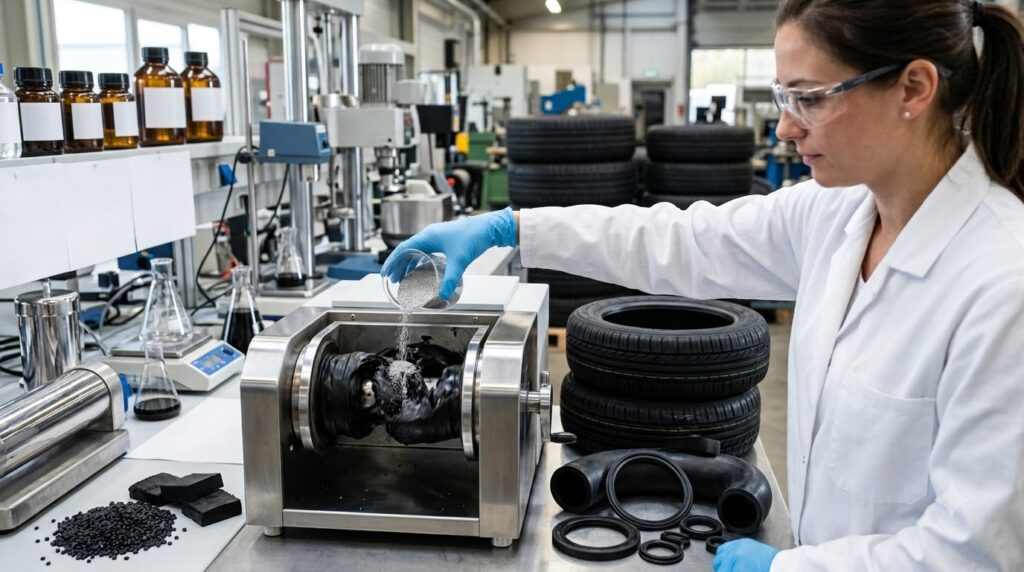
Antioxidant KY-616 / Wingstay L is a rubber antidegradant used to help protect rubber compounds against oxidation, heat aging and degradation during processing and service. It is used in selected rubber formulations where improved resistance to aging and deterioration is required.
For rubber manufacturers, compounders and procurement teams, selecting the right antioxidant is important because environmental and thermal degradation can gradually affect the strength, flexibility, durability and service life of finished rubber products.
In this comprehensive guide, we explain KY-616 / Wingstay L full form, chemical identity, properties, uses, applications, benefits, role in rubber compounding, dosage considerations, storage and bulk procurement.
What Is Antioxidant KY-616 / Wingstay L?
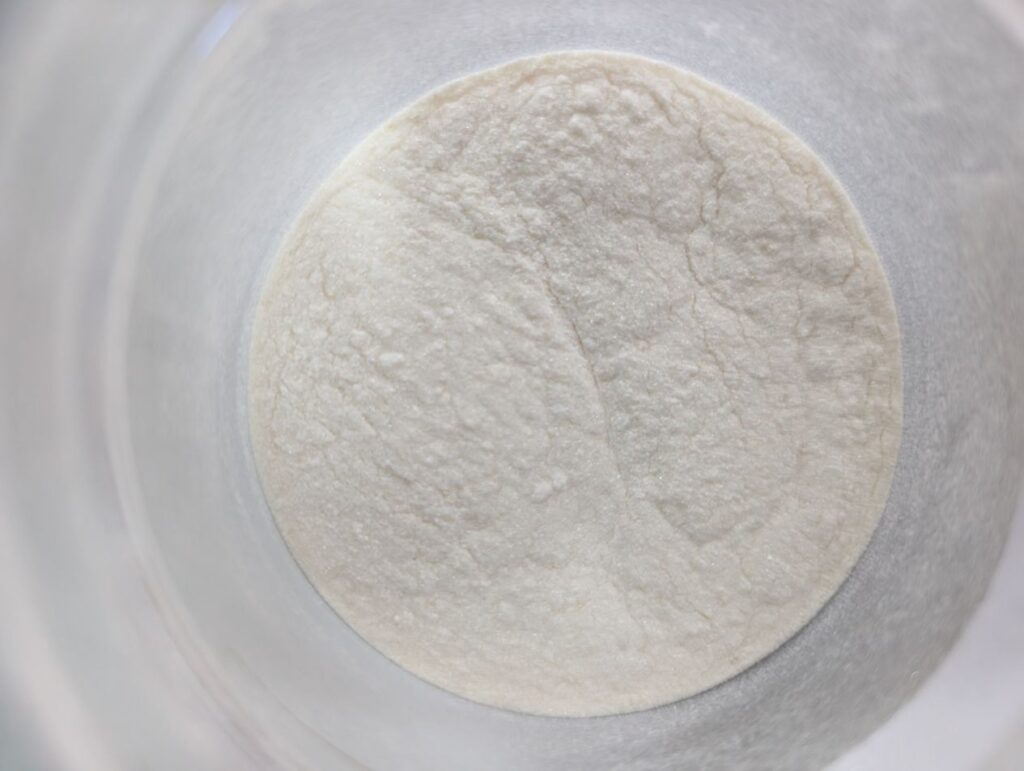
KY-616 / Wingstay L is a commercial rubber antidegradant used in rubber compounding to improve resistance to aging and oxidation.
Wingstay L is a commonly recognized trade name associated with a rubber antioxidant product. The exact chemical composition and specification should be confirmed from the manufacturer’s current Technical Data Sheet (TDS), Safety Data Sheet (SDS) and Certificate of Analysis (COA) because commercial grades and trade names can differ between suppliers.
In rubber formulations, antioxidants are added to slow chemical degradation caused by factors such as:
- Heat
- Oxygen
- Processing conditions
- Long-term aging
- Mechanical stress
- Environmental exposure
This makes KY-616 / Wingstay L relevant to a range of rubber applications where long-term durability is important.
KY-616 / Wingstay L Full Form
Unlike chemicals such as 6PPD, the designation KY-616 is primarily a commercial/product designation rather than a universally standardized chemical abbreviation.
Wingstay L is also a trade/product name.
Therefore, when purchasing KY-616 / Wingstay L, industrial buyers should verify the exact chemical description, specification, composition and grade from the supplier’s current technical documentation.
This is especially important when replacing one supplier’s product with another supplier’s material.
Important purchasing documents
Before approving the material, request:
- TDS — Technical Data Sheet
- SDS — Safety Data Sheet
- COA — Certificate of Analysis
- Product specification
- CAS information where applicable
- Recommended application information
Why Are Rubber Antioxidants Important?
Rubber is susceptible to degradation during processing and service.
Exposure to oxygen, heat and other environmental factors can initiate chemical reactions that gradually change the polymer structure.
This can result in:
- Loss of tensile strength
- Reduced elongation
- Hardening
- Softening
- Surface cracking
- Reduced flexibility
- Loss of durability
- Changes in appearance
- Reduced service life
A rubber antioxidant helps slow these degradation reactions.
The simplified concept is:
Rubber + oxygen/heat → degradation
With an appropriate antidegradant:
Rubber + antioxidant + oxygen/heat → slower degradation
This is why antioxidants are an important part of many rubber formulations.
How Does KY-616 / Wingstay L Work in Rubber?
The effectiveness and mechanism of a rubber antioxidant depend on its specific chemistry.
In general, rubber antioxidants help interrupt or slow the chemical reactions responsible for oxidative degradation.
During processing and service, rubber can generate reactive species through exposure to:
- Heat
- Oxygen
- Mechanical energy
- Processing conditions
- Environmental exposure
These reactive species can initiate reactions that attack the polymer chains.
An appropriate antioxidant can interact with reactive intermediates and help slow the degradation process.
The result can be improved resistance to aging and retention of important physical properties.
Key Properties of KY-616 / Wingstay L
The exact properties depend on the commercial grade and supplier specification. In rubber formulations, KY-616 / Wingstay L is considered for its antidegradant functionality.
Potential formulation benefits include:
1. Oxidation Protection
The antioxidant helps reduce oxidative degradation of rubber during processing and service.
2. Heat-Aging Protection
Rubber products operating at elevated temperatures can experience accelerated degradation.
An appropriate antioxidant system can help improve resistance to thermal aging.
3. Improved Aging Resistance
Antioxidants can help rubber retain important physical properties for longer periods.
4. Processing Protection
Rubber is exposed to heat and mechanical energy during mixing, extrusion, calendaring and molding.
An appropriate antidegradant can help reduce degradation during processing.
5. Compatibility With Rubber Formulations
Depending on the grade and polymer system, KY-616 / Wingstay L can be incorporated into different rubber formulations.
The suitability should always be confirmed through formulation testing.
Applications of KY-616 / Wingstay L in Rubber
KY-616 / Wingstay L can be considered for various rubber applications where protection against oxidative and thermal degradation is required.
1. Tyre Manufacturing
Tyres contain complex rubber formulations designed to withstand:
- Heat
- Mechanical stress
- Repeated deformation
- Oxygen
- Environmental exposure
- Long-term aging
Antioxidants can form an important part of the tyre compound’s antidegradant system.
KY-616 / Wingstay L may be evaluated in suitable tyre-related rubber formulations depending on the polymer and required performance.
2. Automotive Rubber Components
Automotive rubber products can experience elevated temperatures and continuous mechanical stress.
Examples include:
- Hoses
- Seals
- Gaskets
- Bushings
- Mounts
- Belts
- Vibration-control components
- Molded rubber components
A suitable antioxidant package can help maintain the required properties during service.
3. Industrial Rubber Products
Industrial rubber products can be exposed to demanding operating environments.
Potential applications include:
- Conveyor belts
- Industrial hoses
- Rubber sheets
- Rubber profiles
- Seals
- Gaskets
- Rollers
- Molded rubber products
The antioxidant system is selected according to the operating conditions and polymer.
4. Rubber Hoses
Hoses may experience heat, pressure, flexing and exposure to oxygen and other environmental factors.
An appropriate antioxidant can help slow oxidative degradation and support longer service performance.
KY-616 / Wingstay L can be evaluated as part of the antioxidant package in suitable hose formulations.
5. Rubber Belts
Industrial and automotive belts experience repeated flexing and mechanical stress.
Antioxidant protection can help reduce degradation associated with long-term exposure to heat and oxygen.
The optimum antioxidant system depends on the belt’s polymer, operating temperature and required durability.
6. Seals and Gaskets
Rubber seals and gaskets must retain their elasticity and physical integrity during service.
Depending on the polymer and operating conditions, an appropriate antioxidant can help protect against thermal and oxidative aging.
KY-616 / Wingstay L in Rubber Compounding
Rubber compounding involves carefully balancing several materials to achieve the required final properties.
A typical rubber compound may contain:
- Natural or synthetic rubber
- Carbon black
- Silica
- Process oils
- Zinc oxide
- Stearic acid
- Sulfur
- Accelerators
- Antioxidants
- Antiozonants
- Processing aids
- Specialty chemicals
KY-616 / Wingstay L can form part of the antidegradant package.
The compounder must consider the interaction between the antioxidant and other ingredients.
The goal is to achieve an appropriate balance between:
Processing stability → Cure behavior → Aging resistance → Physical properties → Service life
Benefits of Using KY-616 / Wingstay L
When appropriately selected and formulated, KY-616 / Wingstay L can provide several potential benefits.
Major benefits include:
- Protection against oxidative degradation
- Improved heat-aging resistance
- Better resistance to long-term aging
- Support for retention of physical properties
- Protection during rubber processing
- Potentially improved service life
- Suitable for selected industrial rubber formulations
However, performance depends on the specific product grade and complete rubber formulation.
KY-616 / Wingstay L and Heat Aging
Heat is one of the major causes of rubber degradation.
As temperature increases, many chemical reactions occur faster. Long-term exposure to elevated temperature can cause rubber to lose important properties.
Possible effects include:
- Hardening
- Softening
- Reduced tensile strength
- Reduced elongation
- Changes in compression properties
- Cracking
- Loss of flexibility
A suitable antioxidant system can help slow these processes.
This makes antioxidant selection particularly important for rubber products used in:
- Automotive systems
- Machinery
- Industrial equipment
- Engine compartments
- High-temperature environments
KY-616 / Wingstay L vs 6PPD
KY-616 / Wingstay L and 6PPD should not automatically be considered direct replacements for one another.
Their chemical identities, mechanisms, performance profiles and applications may differ.
| Feature | KY-616 / Wingstay L | 6PPD |
|---|---|---|
| Product type | Rubber antidegradant | PPD antidegradant |
| Primary consideration | Oxidative/thermal protection depending on grade | Strong antiozonant + antioxidant |
| Ozone protection | Grade-dependent | Strong |
| Heat-aging protection | Grade-dependent | Good |
| Tyre applications | Depends on formulation | Extensive |
| Chemical identity | Confirm from TDS/SDS | N-(1,3-dimethylbutyl)-N’-phenyl-p-phenylenediamine |
The correct choice depends on the complete rubber formulation and required service performance.
KY-616 / Wingstay L vs TMQ
TMQ is another widely used rubber antioxidant.
TMQ is generally valued for antioxidant and heat-aging protection.
KY-616 / Wingstay L should be compared with TMQ based on the exact commercial grade and technical specification rather than simply by trade name.
Important comparison parameters can include:
- Active chemical
- Purity
- Physical form
- Heat-aging performance
- Processing stability
- Compatibility
- Blooming behavior
- Recommended dosage
- Polymer compatibility
Always compare the current TDS and test results before making a substitution.
KY-616 / Wingstay L Dosage in Rubber
There is no universal dosage that applies to every rubber formulation.
The appropriate dosage depends on:
- Rubber polymer
- Processing temperature
- Service temperature
- Required aging resistance
- Other antioxidants
- Antiozonants
- Fillers
- Oils
- Cure system
- Expected service life
Rubber compounders should establish the optimum level through laboratory trials.
Testing may include:
- Heat-aging tests
- Tensile strength
- Elongation
- Hardness
- Compression set
- Aging retention
- Rheometer testing
- Visual evaluation
- Other application-specific tests
The supplier’s current technical recommendations should be used as the starting point.
Factors Affecting Antioxidant Performance
The performance of KY-616 / Wingstay L depends on more than its dosage.
Polymer Type
Different rubber polymers have different aging characteristics.
Temperature
Higher temperatures generally accelerate degradation.
Oxygen Exposure
Greater oxygen exposure can increase oxidative degradation.
Processing Conditions
Mixing, extrusion, calendaring and molding can expose rubber to heat and mechanical energy.
Antioxidant Combination
Several antioxidants and antidegradants may be combined to provide complementary protection.
Filler System
Carbon black, silica and other fillers can influence compound behavior.
Service Conditions
Outdoor exposure, dynamic loading, chemicals and temperature cycles can all affect long-term performance.
KY-616 / Wingstay L in Natural Rubber
Natural rubber is widely used in tyres and industrial rubber products.
During processing and service, natural rubber can undergo oxidative degradation.
An appropriate antioxidant can help reduce this degradation and support retention of:
- Tensile strength
- Elongation
- Flexibility
- Durability
KY-616 / Wingstay L should be evaluated according to its specific grade and technical specification before incorporation into a natural-rubber compound.
KY-616 / Wingstay L in Synthetic Rubber
Synthetic rubbers can also require antioxidant protection.
Potential polymer systems include:
- SBR
- BR
- NR/BR blends
- NR/SBR blends
- EPDM
- Other suitable rubber polymers
However, antioxidant compatibility and performance vary between polymers.
Therefore, laboratory testing should be conducted before approving a material for production.
How to Select KY-616 / Wingstay L for Rubber Manufacturing
Industrial buyers should evaluate the following before purchasing.
1. Exact Chemical Specification
Confirm the exact chemical identity and grade.
2. Purity
Higher consistency in raw material quality can help improve formulation consistency.
3. Physical Properties
Review parameters such as:
- Appearance
- Melting range
- Ash
- Moisture
- Active content
- Other supplier-specific specifications
4. Batch Consistency
Consistent quality is critical for large-scale rubber production.
5. Technical Documentation
Request:
- TDS
- SDS
- COA
- Product specification
6. Packaging
Packaging should protect the material during storage and transportation.
7. Supply Reliability
Industrial buyers should consider:
- Production capacity
- Lead time
- Logistics
- Export capability
- Stock availability
Storage and Handling of KY-616 / Wingstay L
KY-616 / Wingstay L should be stored and handled according to the supplier’s latest SDS.
General good industrial practices include:
- Store in a cool and dry area.
- Keep packaging properly closed.
- Protect the product from contamination.
- Avoid unnecessary exposure to heat and moisture.
- Maintain appropriate ventilation.
- Follow applicable workplace safety procedures.
- Use appropriate PPE as specified by the SDS.
The manufacturer’s current SDS should always be consulted for specific handling, storage and emergency procedures.
How to Buy KY-616 / Wingstay L in Bulk
For industrial rubber manufacturers, a bulk enquiry should ideally include:
- Product name
- Required quantity
- Application
- Rubber polymer
- Required specification
- Packaging requirement
- Delivery location
- Domestic or export requirement
- Required technical documents
- Expected annual consumption
Providing this information allows the supplier to respond more accurately regarding product grade, availability, packaging, lead time and commercial terms.
Why Choose a Specialized Rubber Chemical Supplier?
Rubber chemical procurement is not only about finding the lowest price.
For a production manufacturer, a reliable supplier should provide:
Consistent product quality → Technical documentation → Sample support → Bulk availability → Reliable logistics → Long-term supply
This is especially important when antioxidant performance affects the aging characteristics of the finished rubber product.
A supplier with experience in rubber chemicals can also help buyers understand product specifications and application requirements.
Frequently Asked Questions About KY-616 / Wingstay L
What is KY-616?
KY-616 is a commercial/product designation used for a rubber antidegradant. Buyers should verify the exact chemical identity and specification from the current supplier TDS and SDS.
What is Wingstay L?
Wingstay L is a trade/product name associated with a rubber antioxidant/antidegradant. The exact grade and chemical composition should be confirmed from the manufacturer’s technical documentation.
Is KY-616 an antioxidant?
KY-616 is used as a rubber antidegradant, with antioxidant functionality depending on the specific product grade and formulation.
What is Wingstay L used for?
Wingstay L is used in rubber formulations where protection against oxidative and thermal degradation is required, subject to the exact product specification.
Can KY-616 / Wingstay L be used in tyres?
It may be considered for suitable tyre and rubber formulations, but the exact application should be confirmed against the product’s technical specification and the requirements of the tyre compound.
Can KY-616 / Wingstay L be used with 6PPD?
Potentially, depending on the formulation. Different antidegradants can provide complementary functions, but compatibility and performance should be validated through formulation testing.
What is the dosage of KY-616 / Wingstay L?
There is no universal dosage. The optimum amount depends on the polymer, service conditions, other antidegradants and required aging performance.
Is Wingstay L the same as 6PPD?
No. Wingstay L and 6PPD should not be assumed to be chemically identical. Their exact chemical identities and specifications should be checked from the relevant manufacturer’s documentation.
How should KY-616 / Wingstay L be stored?
Store according to the manufacturer’s SDS, generally in a cool, dry and properly ventilated location with the packaging securely closed.
Where can I buy KY-616 / Wingstay L in bulk?
Industrial buyers can approach specialized rubber chemical manufacturers and suppliers. Request the latest TDS, SDS, COA, product specification and commercial quotation before placing a bulk order.
KY-616 / Wingstay L for Rubber Manufacturers
For manufacturers searching for KY-616 antioxidant, Wingstay L antioxidant or rubber antidegradant, product consistency and technical documentation are important.
Before approving a supplier, evaluate:
- Chemical specification
- Product quality
- Batch consistency
- Technical documents
- Packaging
- Production capacity
- Supply reliability
- Delivery capability
- Technical support
- Bulk pricing
A consistent antioxidant supply can help rubber manufacturers maintain stable production and predictable finished-product performance.
Get KY-616 / Wingstay L and Other Rubber Chemicals
Arihant Reclamation Pvt. Ltd. (ARPL) supplies a range of rubber chemicals for industrial rubber and polymer applications, including rubber accelerators, antioxidants/antidegradants, 6PPD, TMQ, zinc oxide and other rubber-compounding chemicals.
If you are looking for KY-616 / Wingstay L for bulk rubber manufacturing requirements, contact ARPL for product specifications, availability, packaging and commercial information.
Bulk & Enquiries: +91-8860732624
For a faster response, mention your required quantity, application, rubber polymer, specification and delivery location when making your enquiry.
Conclusion
Antioxidant KY-616 / Wingstay L is used as a rubber antidegradant to help protect suitable rubber compounds against oxidative and thermal degradation.
Antioxidants play an important role in maintaining rubber properties during processing and long-term service.
Depending on the exact product grade, KY-616 / Wingstay L can be considered for applications involving:
- Tyres
- Automotive rubber components
- Industrial rubber goods
- Hoses
- Belts
- Seals
- Gaskets
- Molded rubber products
The most important point for industrial buyers is that KY-616 and Wingstay L are product/trade designations, so the exact chemical identity and specification should always be verified from the current TDS and SDS.
The right antioxidant should be selected based on the rubber polymer, processing conditions, service temperature, aging requirements and complete antidegradant system.
For bulk requirements, manufacturers should also consider quality consistency, technical documentation, supply reliability and technical support, rather than price alone.
For KY-616 / Wingstay L and other rubber chemical bulk requirements, contact ARPL at +91-8860732624.