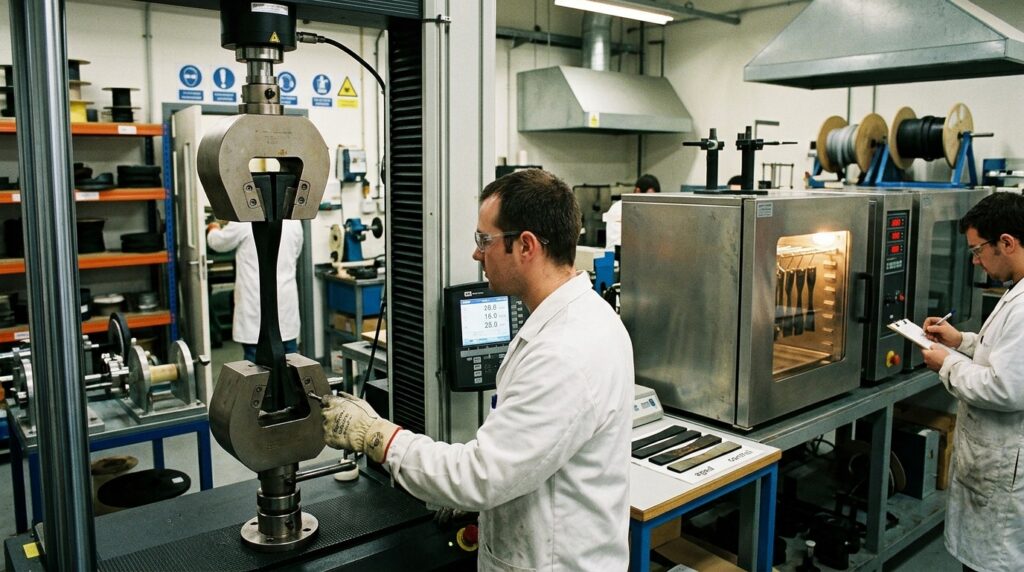
Industrial rubber products are used in some of the toughest operating environments across the world. Tyres continuously face road friction and heat, conveyor belts operate under heavy industrial loads, automotive rubber components experience constant stress and vibration, while industrial hoses and seals work under pressure, chemicals, and changing temperatures. Because of these demanding conditions, manufacturers cannot depend only on appearance or basic inspection methods. Industrial rubber testing has become one of the most important stages in modern rubber manufacturing because it determines the strength, flexibility, durability, heat resistance, and long-term performance of rubber products before they enter the market.
Modern manufacturing industries rely heavily on industrial rubber chemicals to improve product quality and help rubber compounds pass strict testing standards. Rubber accelerators, rubber antioxidants, zinc oxide, reinforcing fillers, and processing chemicals are carefully combined during rubber compounding to improve curing efficiency, tensile strength, aging resistance, and thermal stability. Without proper testing and high-quality industrial rubber chemicals, rubber products can crack, lose elasticity, fail under pressure, or deteriorate quickly in industrial environments.
Why Industrial Rubber Testing Is Important
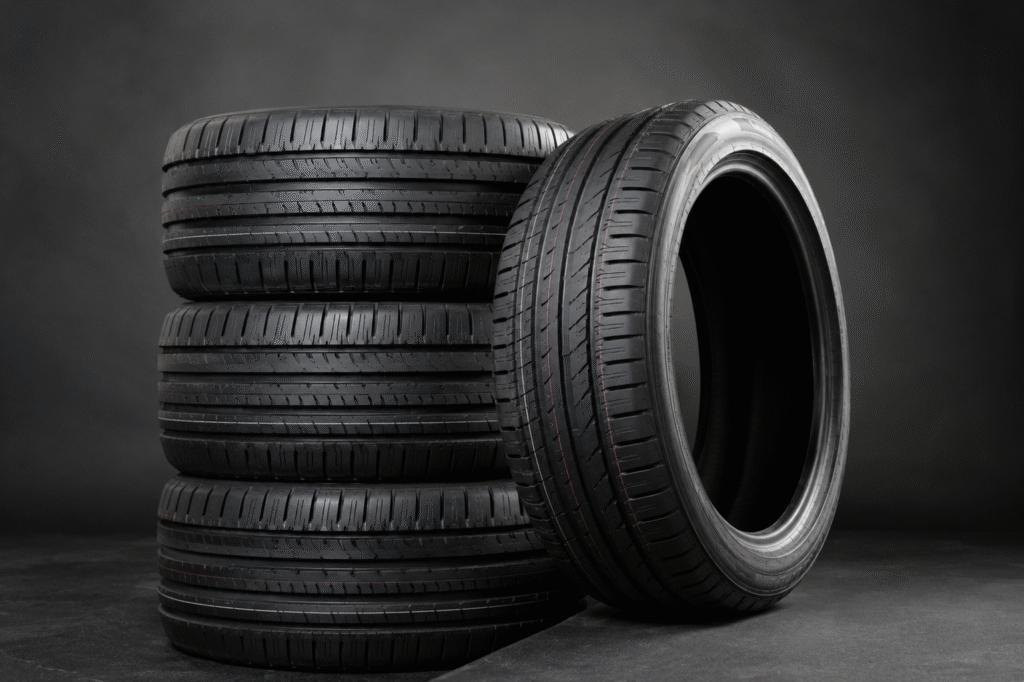
Industrial rubber testing is performed to ensure products meet:
- Industrial quality standards
- Export compliance requirements
- Automotive safety specifications
- Heat resistance benchmarks
- Durability expectations
- Long-term performance goals
Manufacturers use rubber testing to reduce:
- Product failure rates
- Cracking problems
- Premature aging
- Surface deformation
- Tensile failure
- Heat damage
Industries such as tyre manufacturing, automotive production, mining, aerospace, conveyor systems, electrical manufacturing, and construction depend heavily on advanced rubber testing systems to maintain reliability and product safety.
Main Objectives of Rubber Testing
| Testing Objective | Industrial Importance |
|---|---|
| Heat Resistance | Prevents thermal damage |
| Tensile Strength | Improves load-bearing capacity |
| Aging Resistance | Extends product lifespan |
| Abrasion Resistance | Reduces wear and friction |
| Flexibility Testing | Maintains elasticity |
| Compression Testing | Improves shape recovery |
| Chemical Resistance | Protects against oils and chemicals |
Heat Resistance Testing in Rubber Manufacturing
Heat resistance testing is one of the most critical quality control procedures in industrial rubber manufacturing. Rubber products used in tyres, automotive engines, conveyor systems, electrical cables, industrial belts, and heavy machinery often operate under continuous high temperatures. Excessive heat can damage rubber compounds by reducing elasticity, increasing hardness, weakening tensile strength, and causing surface cracks.
During heat resistance testing, rubber samples are placed inside specialized industrial heating chambers where they are exposed to controlled temperatures for extended periods. Engineers later evaluate how much the rubber has changed in terms of flexibility, hardness, surface condition, elongation, and overall mechanical strength.
Heat resistance testing is extremely important because many industrial rubber products must continue performing efficiently even after prolonged exposure to heat. Tyres running at high speeds generate enormous thermal energy, while conveyor belts in mining industries often operate under continuous friction and load pressure. Automotive rubber seals and hoses must also survive engine temperatures and environmental stress.
Common Problems Detected During Heat Testing
- Surface cracking
- Hardening of rubber
- Loss of elasticity
- Structural deformation
- Reduced tensile strength
- Color changes
- Oxidation damage
Rubber Chemicals Used for Heat Resistance
Industrial rubber chemicals are essential for improving thermal performance during manufacturing.
| Rubber Chemical | Function in Heat Resistance |
|---|---|
| TMQ / TDQ | Protects against thermal aging |
| 6PPD | Prevents oxidation damage |
| CBS | Improves stable vulcanization |
| MBTS | Controlled curing performance |
| Zinc Oxide | Activates vulcanization |
| PVI | Prevents premature curing |
Rubber antioxidants such as TMQ and 6PPD are especially important because they help rubber survive long-term exposure to heat and oxygen without rapid deterioration.
Tensile Strength Testing Explained
Tensile testing measures the ability of rubber products to resist pulling forces before breaking. This test is extremely important for tyres, industrial belts, rubber sheets, automotive mounts, conveyor systems, and heavy-duty rubber components that experience constant mechanical stress during operation.
Rubber samples are placed inside computerized tensile testing machines where controlled force is applied gradually until the material stretches and finally breaks. The testing machine records important data including maximum force capacity, elongation percentage, flexibility behavior, and breaking point.
Tensile testing helps manufacturers understand whether the rubber compound has enough strength to survive industrial applications without tearing or deforming. A high tensile value generally indicates stronger molecular bonding and better vulcanization quality.
Properties Measured in Tensile Testing
| Property | Industrial Significance |
|---|---|
| Tensile Strength | Maximum load capacity |
| Elongation at Break | Stretching ability |
| Elastic Recovery | Flexibility retention |
| Breaking Point | Durability limit |
| Modulus Strength | Resistance to deformation |
How Rubber Chemicals Improve Tensile Strength
The strength of industrial rubber products depends heavily on proper rubber compounding and the use of industrial rubber chemicals.
Rubber accelerators such as MBT, CBS, MBTS, TMTD, and DPG improve vulcanization efficiency and create stronger cross-linked polymer structures. Reinforcing fillers like carbon black and silica significantly increase mechanical strength and abrasion resistance.
These improvements help manufacturers produce:
- Stronger tyres
- Durable conveyor belts
- Flexible automotive components
- Long-lasting industrial hoses
- Heavy-duty rubber sheets
Aging Resistance Testing in Industrial Rubber
Rubber products naturally degrade over time due to exposure to oxygen, ozone, sunlight, UV radiation, chemicals, moisture, and environmental pollution. Aging resistance testing evaluates how rubber compounds behave after long-term environmental exposure.
This testing is extremely important for outdoor industrial products, tyres, automotive components, construction materials, mining belts, and weather-exposed rubber systems. Manufacturers must ensure that rubber products maintain flexibility and structural integrity over long service periods.
During aging resistance testing, rubber samples are exposed to:
- Ozone chambers
- UV light systems
- Accelerated aging ovens
- Weather simulation equipment
- Humidity chambers
After testing, engineers inspect the samples for cracking, hardness increase, tensile reduction, discoloration, and elasticity loss.
Rubber Antioxidants Used for Aging Resistance
| Rubber Antioxidant | Main Function |
|---|---|
| 6PPD | Ozone crack protection |
| TMQ | Heat aging resistance |
| TDQ | Oxidation control |
| IPPD | Weather protection |
| MBI | Long-term stabilization |
| Wingstay L | Rubber preservation |
Rubber antioxidants are critical because they significantly extend the service life of industrial rubber products.
Abrasion Resistance Testing
Abrasion testing measures how well rubber can resist wear caused by continuous friction and surface contact. This testing is extremely important for:
- Tyres
- Conveyor belts
- Mining rubber products
- Industrial flooring
- Footwear soles
Poor abrasion resistance leads to faster material wear and shorter product lifespan.
Carbon black, silica, and specialized rubber accelerators are widely used to improve abrasion resistance in industrial rubber compounds.
Compression Set Testing
Compression set testing determines whether rubber can return to its original shape after being compressed for long periods.
This is important for:
- Rubber seals
- Gaskets
- O-rings
- Automotive mounts
- Industrial packing systems
Rubber products with poor compression recovery may leak or fail during industrial usage.
Role of Vulcanization in Rubber Testing
Vulcanization is one of the most important manufacturing stages affecting industrial rubber performance. During vulcanization, sulfur creates cross-links between rubber polymer chains, transforming soft rubber into durable elastic material.
Rubber accelerators help control vulcanization speed and curing quality.
Common vulcanization accelerators include:
- MBT
- MBTS
- CBS
- TMTD
- ZDEC
- ZDBC
- ZMBT
- TBBS
- DPG
Proper vulcanization improves:
- Heat resistance
- Tensile strength
- Aging performance
- Abrasion resistance
- Flexibility
Industries Depending on Rubber Testing
Industrial rubber testing is essential for:
- Tyre manufacturing
- Automotive industry
- Mining sector
- Construction machinery
- Aerospace engineering
- Industrial conveyor systems
- Electrical insulation
- Heavy industrial equipment
- Rubber footwear manufacturing
Global buyers and industrial manufacturers demand high-performance rubber products that meet strict durability and safety standards.
Industrial Rubber Chemicals Manufactured by ARPL
Arihant Reclamation Pvt. Ltd. manufactures and supplies:
- MBT
- MBTS
- CBS
- TMTD
- ZDEC
- ZDBC
- ZMBT
- DPG
- 6PPD
- TMQ / TDQ
- PVI
- Zinc Oxide
These industrial rubber chemicals are widely used in tyre manufacturing, conveyor belts, industrial rubber products, automotive rubber components, and advanced rubber testing applications.
Contact Arihant Reclamation Pvt. Ltd.
For industrial rubber chemicals and bulk supply requirements:
📞 +91-8860732624
📧 arihantreclamation@gmail.com
🌐 https://arihantreclamationpvtltd.com/